From the Owner · East County Septic Guide
How Many Years Does a Septic Tank Usually Last?
Quick Answer
In 2026, EPA guidance puts a concrete septic tank at 50 years or more, and a whole septic system, drainfield included, at about 15 to 40 years on average. Most of the septic calls in our job files around East County San Diego, from El Cajon out to Campo, turn out to be a blocked line right before the tank, from roots or toilet paper, and those clear without touching the tank. We don't quote septic line work over the phone because we camera the line first, then give you options and prices before anything starts.
Most homes in the city of San Diego are on city sewer, so a lot of plumbers don't think about septic much. Out where we work it's different. Once you get past El Cajon into Alpine, Campo, and Julian, plenty of homes send everything to a tank in the yard.
I've been in plumbing for more than 20 years, and I'll be straight with you about where my part of the job ends. We handle the pipe from your house to the tank. We clear it, camera it, find the tank when nobody knows where it is, and add clean-outs so it's easier to get into next time. When the problem is the tank itself or the field behind it, I'll tell you that and point you to a septic company. If we don't already have one we use, we find a company with really good reviews and send you to them.
How long does each part of a septic system last?
There isn't one number, because a septic system is three things: the pipe from your house, the tank, and the drainfield. They wear out on different clocks.
| Part | Typical lifespan | Source |
|---|---|---|
| Concrete septic tank | 50 years or more, though older tanks may not be built as well | EPA |
| Whole septic system, drainfield included | 15 to 40 years on average, longer with good care | EPA homebuyer's guide |
| Cast iron sewer line from the house | About 70 to 75 years, less when it sits in dirt | Brooks Sitko |
That last row is the one people forget. If your home is old enough to have cast iron running out to the tank, that pipe is sitting in dirt, and buried cast iron rots out faster than the tank it feeds.
What shortens a septic tank's life?
- What the tank is made of and how well it went in. EPA says lifespan comes down to the material, the design, the installation, and how it's been cared for.
- How often it gets pumped. EPA's guidance is to have the system inspected and the tank pumped about every three to five years. Skip that and solids head for the field.
- What goes down the drains. Grease hardens in the pipes, and baby wipes don't break down the way toilet paper does. Both cause trouble long before they reach the tank.
- Roots. Trees and shrubs near the line or the tank will find their way into the pipe. That was the problem on the El Cajon call further down.
- Too much water at once. EPA warns that doing all the laundry in one day can flood the drainfield. Spreading it out gives the tank time to work.
- Nobody knowing where anything is. If there's no clean-out and no one knows where the lids are, small problems sit until they're big ones.
How do you know the problem is past the pipe?
We work it by process of elimination. If one drain is slow, it's that drain. If every toilet in the house backs up at once, it's the main line or something past it. We clear the line and run a camera all the way to the tank inlet.
If the camera shows roots, paper, or a broken section in the pipe, that's ours to fix. If the pipe is clean right into the tank and the house still backs up, the trouble is in the tank or the drainfield. EPA's warning signs for that are a strong smell around the tank or field and standing water over the field. At that point I'll tell you so, and you won't pay us to keep snaking a line that isn't the problem.
Where does a plumber's job end on a septic system?
Here's what we do on septic homes, all of it from our own job files:
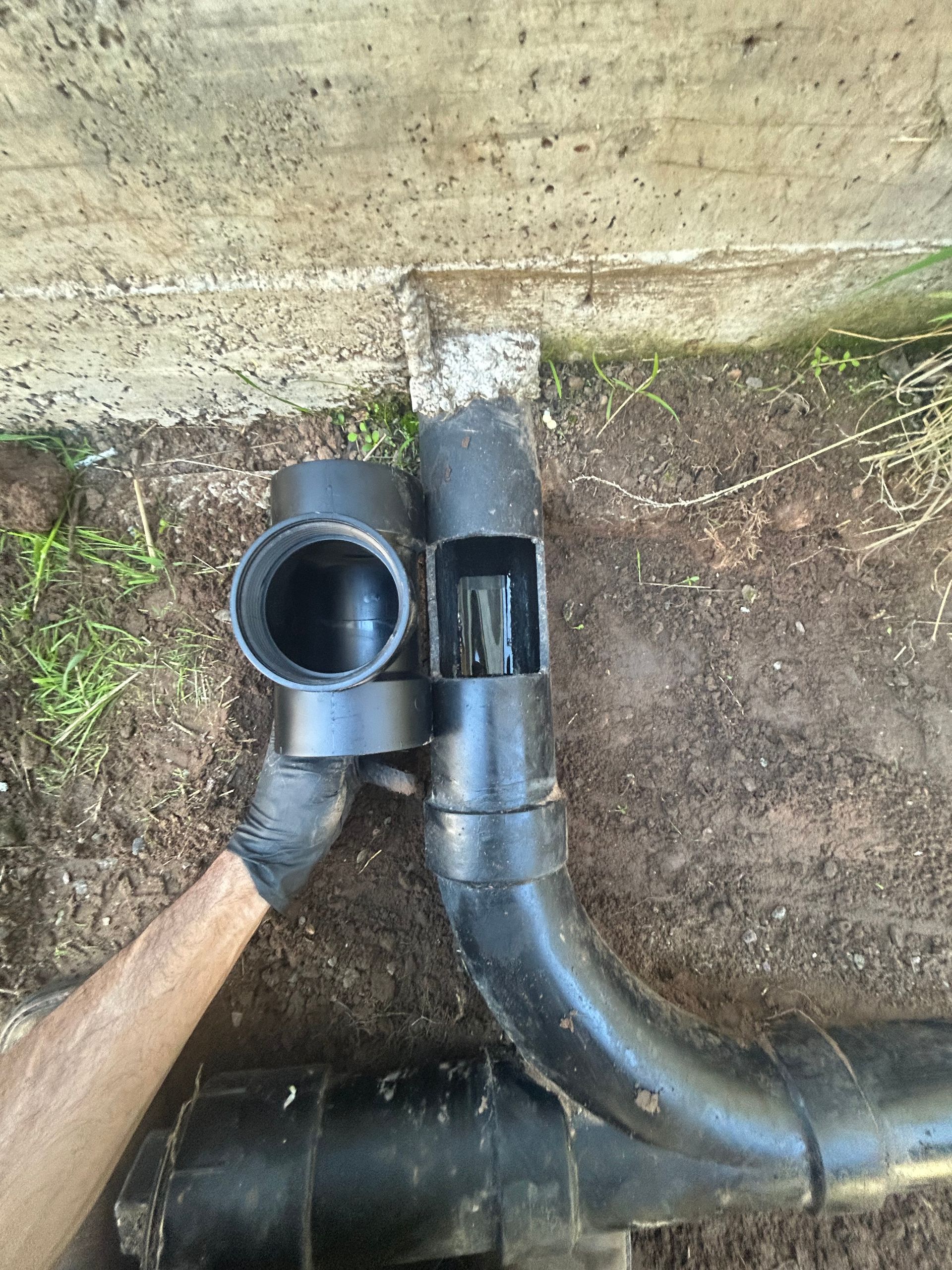
- Clear stoppages in the main sewer line up to the tank inlet, with a cable from the clean-outs or from the inlet under the lid.
- Camera the line from the house to the tank and save the footage for you or your realtor.
- Use the camera to find the tank inlet and the general spot where the lids are.
- Install new clean-outs so the line can be reached without digging next time.
- Repair sewer line sections between the house and the tank.
- Smaller tank fixes. I did a fiberglass repair and lid replacement on a tank in El Cajon.
Pumping the tank and work on the drainfield are jobs for a septic company. You can see everything else we handle on our sewer line repair and drain cleaning page.
Three septic calls from our job files
Finding a tank nobody could find in Campo
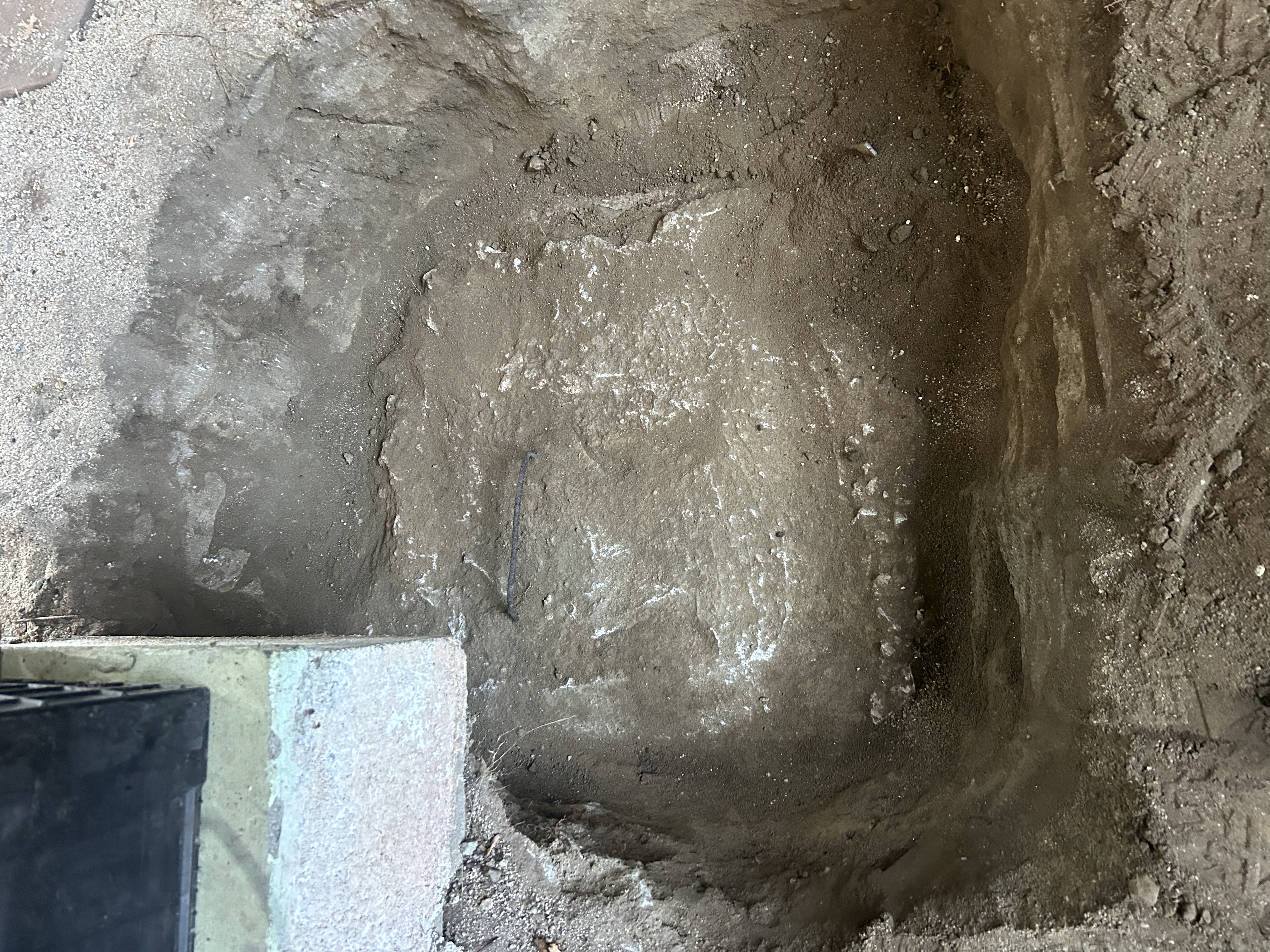
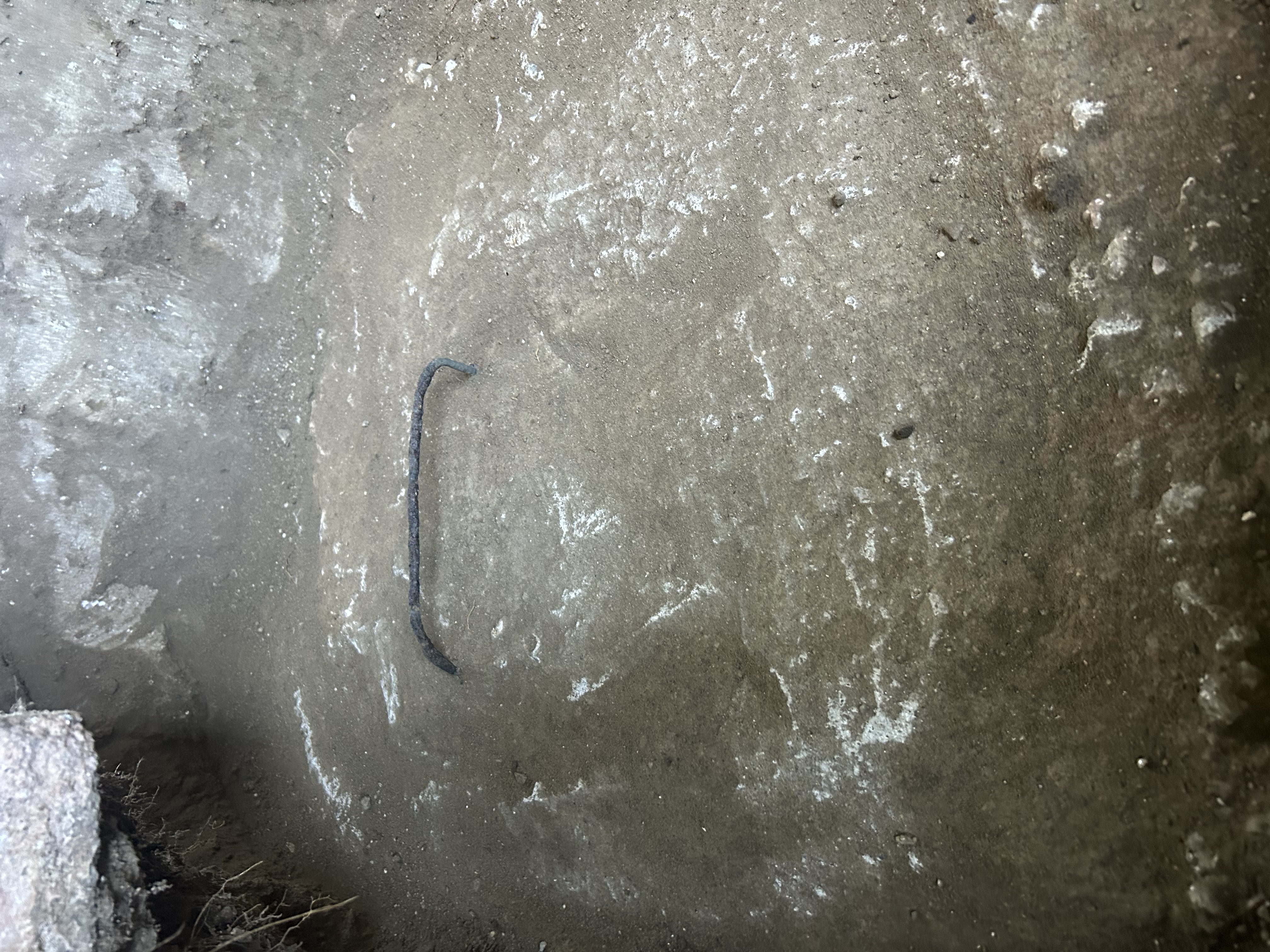
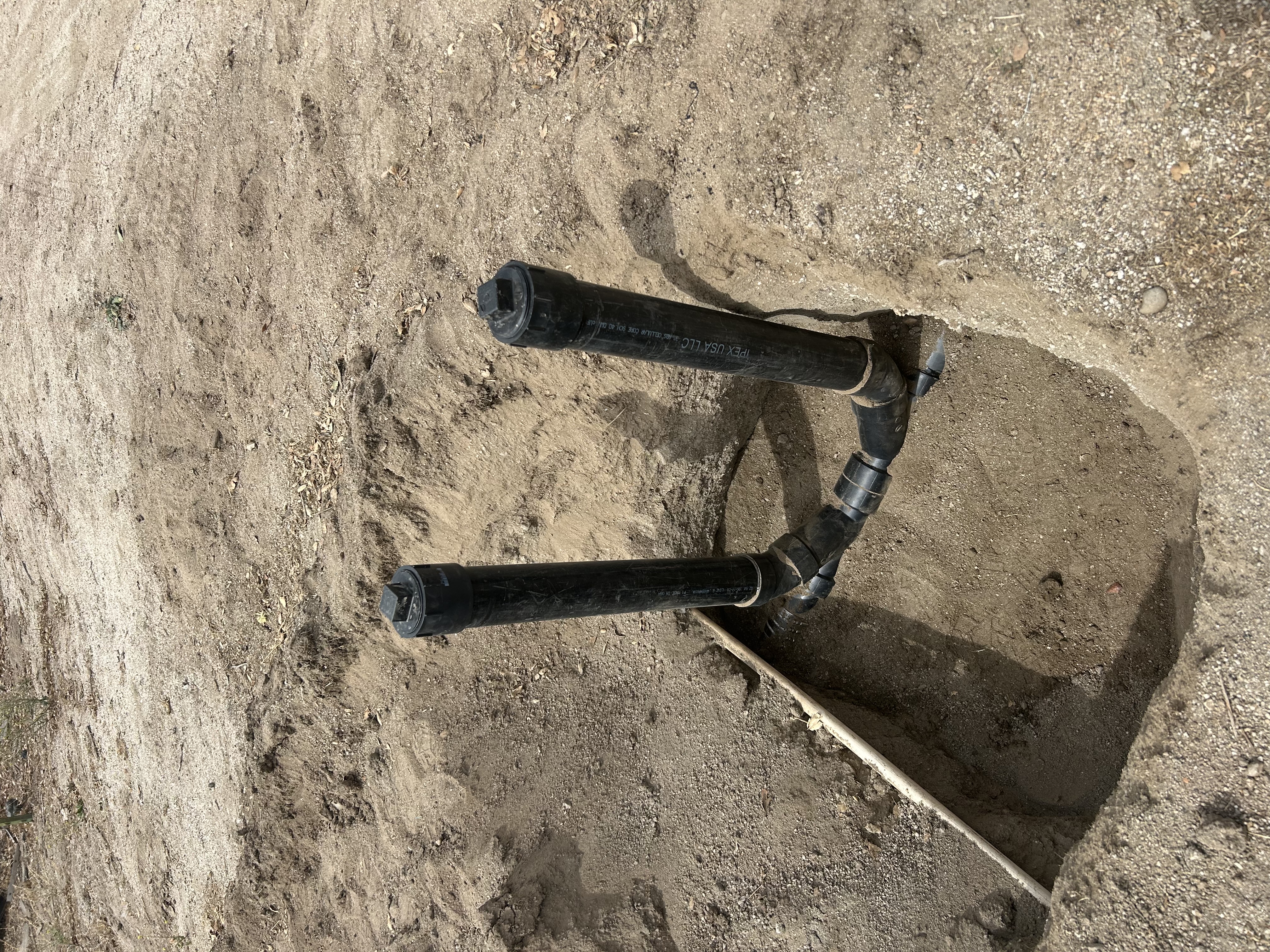
Over three visits to a home in Campo, our team ran a camera down the sewer main to find where it entered the septic tank and roughly where the lids were. We dug down to the inlet, then installed double sweep clean-outs about 80 to 100 feet downstream of the existing clean-out. Now anyone who works on this system can scope straight to the tank instead of guessing.
Roots at the inlet in El Cajon
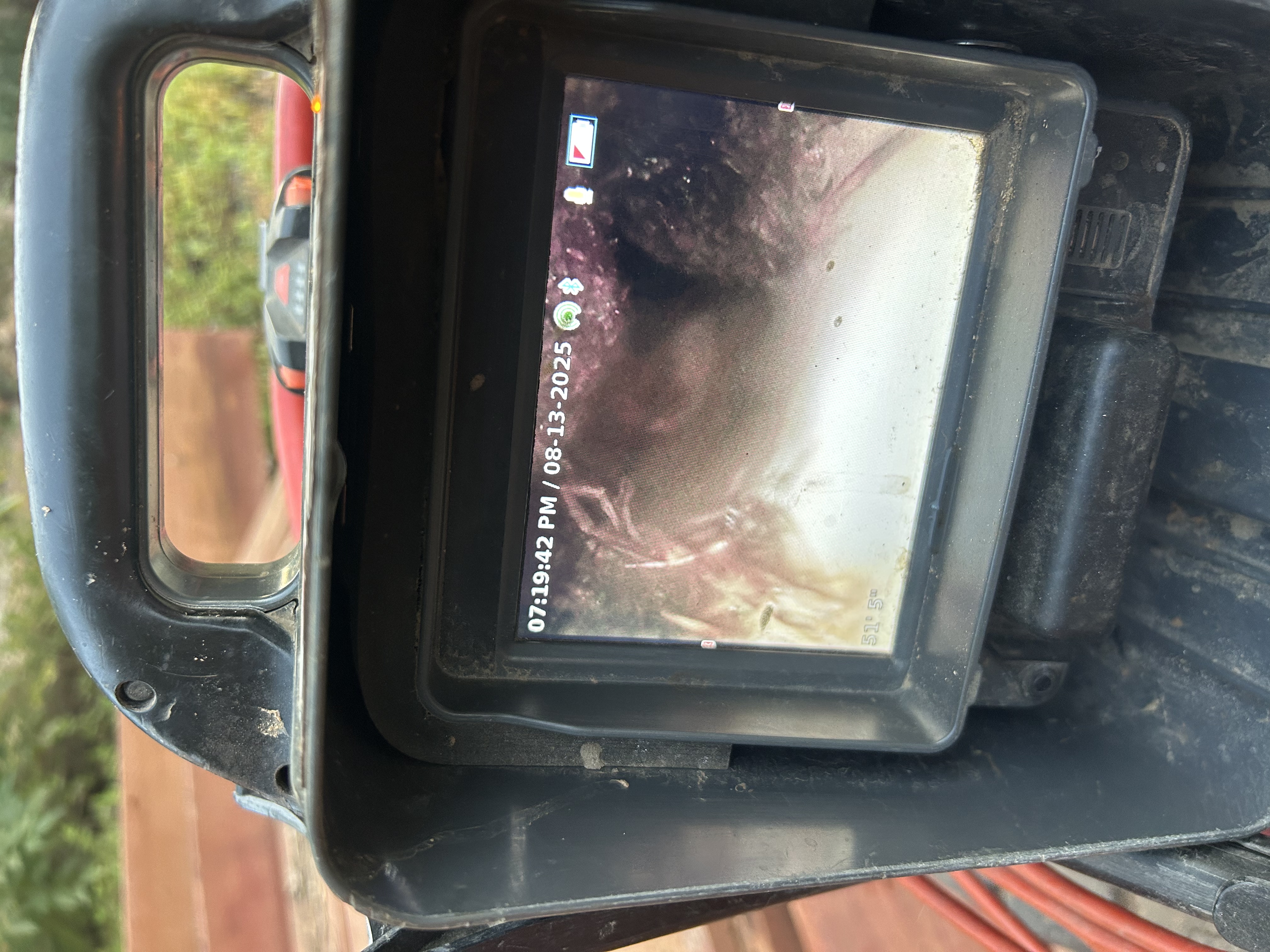
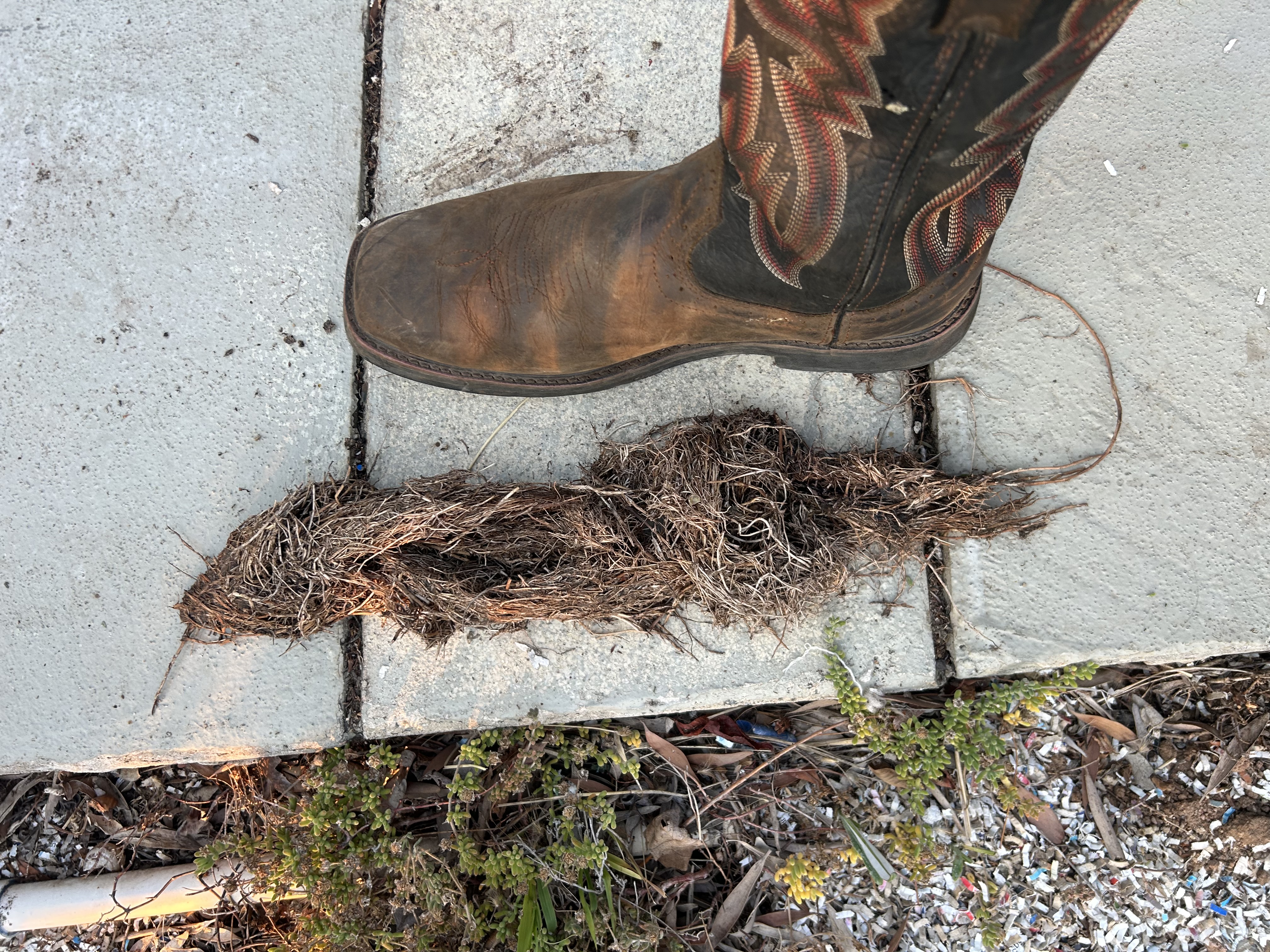
This El Cajon home had a main line stoppage, and the camera showed roots in the sewer main. We cleared the blockage from the septic tank inlet under the lid and got the house draining again. The tank itself was never the problem.
A clean report for a home sale in Julian
A realtor and homeowner in Julian needed to know the condition of the sewer line before a sale. We ran the camera from a clean-out inside the house about 39 feet to the septic tank. The whole line was in good shape with no cracks or breaks, and we saved a copy of the footage for both of them.
"Brooks & his team have pretty much been my plumbing heroes! Removing cast iron pipes, rebuilding leech lines for grey water & helped me find septic tank services! They are honest & fair with pricing!"
5-star Google review, El Cajon
If your drains keep stopping up, it's worth reading how often drains actually need clearing, since the same rules apply to a line that runs to a tank.
Frequently asked questions
How Many Years Does a Septic Tank Usually Last?
In 2026, EPA guidance puts a concrete septic tank at 50 years or more, and a whole septic system, drainfield included, at about 15 to 40 years on average. Most of the septic calls in our job files around East County San Diego, from El Cajon out to Campo, turn out to be a blocked line right before the tank, from roots or toilet paper, and those clear without touching the tank. We don't quote septic line work over the phone because we camera the line first, then give you options and prices before anything starts.
What is the average lifespan of a septic tank drain field?
EPA's 15 to 40 year figure is for the whole system, and the drainfield is part of it. The field is the piece that takes the most abuse from grease, solids, and too much water at once, so how you use the drains matters more for the field than for the tank.
What is the most common cause of septic tank failure?
On the calls we get, the first thing to go wrong is usually the line before the tank: roots getting into the pipe, or toilet paper and wipes packing up at the inlet. EPA points to skipped pumping and grease and solids clogging the drainfield as the big reasons whole systems fail.
How to tell if your drainfield is bad?
EPA lists a strong odor around the tank or drainfield, standing water over the field, and drains backing up in the house. If we camera the line into the tank and the pipe is clean, the backup is coming from the tank or the field, and that is a job for a septic company.
Can a septic system be repaired?
Often, yes. Blocked or root-filled lines into the tank can be cleared, clean-outs can be added, and lids and small fiberglass damage can be fixed. A failed tank or drainfield is a bigger job, and we will help you find a septic company with good reviews for it.
How much do septic repairs cost?
For the line into the tank it depends on what the camera shows, how deep the pipe is, and whether it has to be dug up, so we don't give a flat number over the phone. You get options and the price for each before we start. Pumping and tank or field work are priced by the septic company.
Drains backing up and you're on septic?
Call us at (619) 922-0473. We get out the same day about 9 times out of 10, and you'll have options and a free estimate before any work starts. We cover El Cajon, Alpine, Campo, Julian, and the rest of our service area, and we answer 24/7.
Brooks Sitko, Owner